Why is Gen Z Ditching Expensive Smartphones for 20-Year-Old Cameras?
Read more

Every time a new generative image technology launches, a wave of anxiety sweeps through photography forums: "Will mechanical cameras become scrap metal?", "Will clients still pay a photographer when they can just type a few prompt lines?".
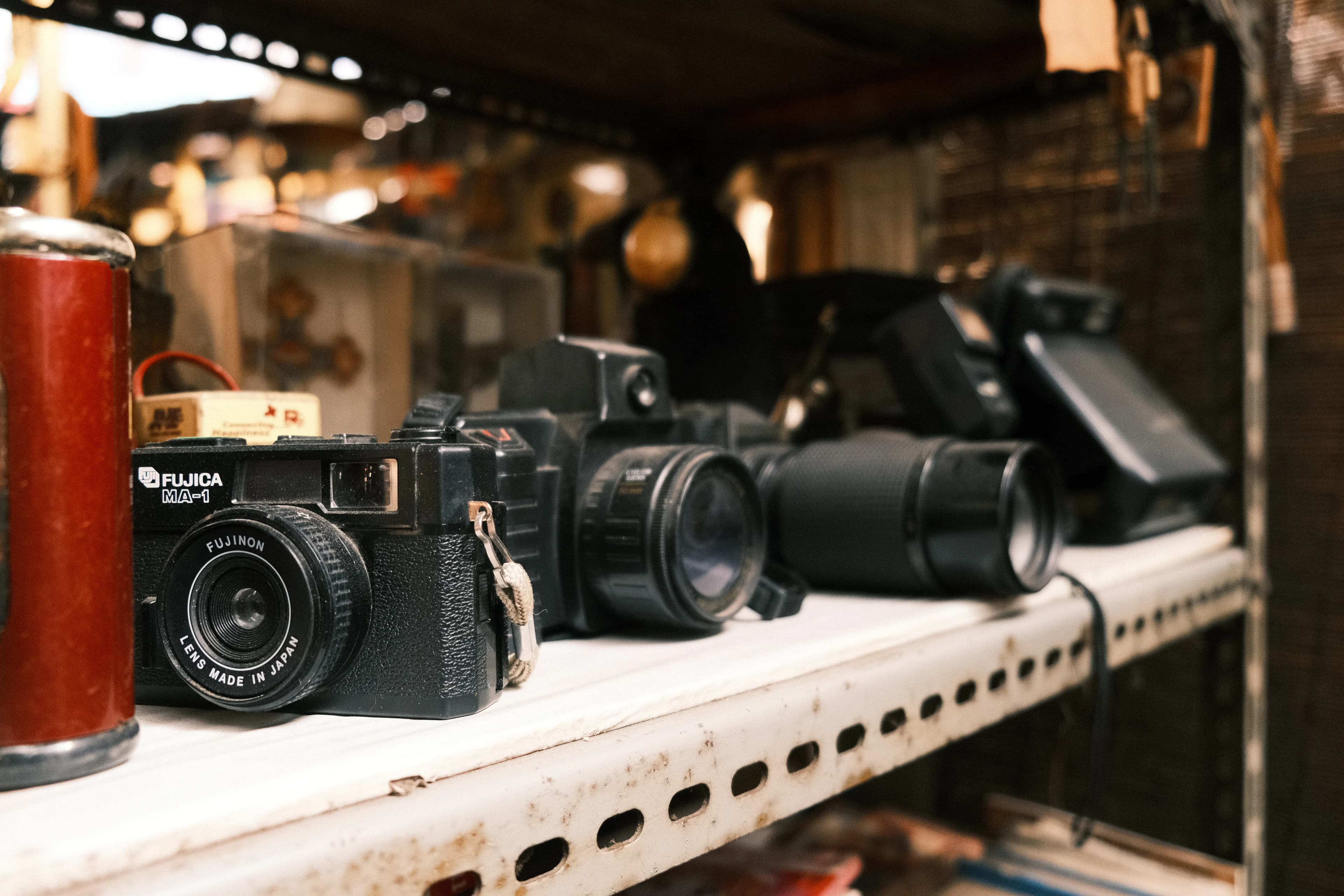
History is actually repeating itself. In 1839, when the photographic camera was born, painter Paul Delaroche exclaimed: "From today, painting is dead." But painting didn't die; it simply shed the burden of copying reality to birth Impressionism and Modernism. AI today puts photography at the exact same turning point: It is destroying a part of the photography profession, but simultaneously saving the core essence of pressing the shutter. The craze of Gen Z buying old cameras for authentic photos is proof of this.
It is undeniable: some segments of commercial photography are disappearing at breakneck speed.
The Death of "Lazy Illustration" (Stock Photography) If your definition of photography is arranging a generic office model, one person shaking hands with another against a white background to sell on stock image sites — that segment is officially dead.
Businesses no longer have a reason to pay hundreds of dollars for a simple product illustration shoot when Midjourney or Stable Diffusion can output 10 variations in 30 seconds at near-zero cost.
The Purge of Repetitive Technical Tasks Post-production technicians specializing in time-consuming tasks like clipping paths, background removal, and basic skin retouching are being completely replaced by automated algorithms. Skills that were considered "trade secrets" in Photoshop 10 years ago are now encapsulated in a single button.

Looked at soberly, AI is not stealing the ability to take photos; it is giving time back to the photographer.
Post-Production Workflow Breakthrough Sitting in front of a computer screen to cull thousands of wedding or event photos is the nightmare of any professional. Current AI algorithms recognize facial expressions, smiles, and whether eyes are open or closed to eliminate bad shots in minutes.
Tools like Adobe Firefly integrated into Lightroom/Photoshop with Denoise (via machine learning) and intelligent subject recognition (AI Masking) do not create fake content. They act as diligent digital darkroom assistants, processing complex selections accurately in milliseconds. Similar to how software affects video editing, AI Masking in photography is making a massive difference in speed.
Returning Photography to its Origin: Concept and Moment When image production becomes too easy, the value of pure technique hits rock bottom. The only thing retaining viewers now is the photographer's eye: a unique perspective, the ability to capture natural light, and choosing the decisive moment. AI forces the person holding the camera to think like a true artist (as analyzed in Pro vs Newbie differences), rather than a camera operating machine.
To avoid panic, professionals need to clearly understand the structure that creates the value of a real photograph.

Physical Presence & Trust Photography carries an intrinsic value that synthetic media will never have: Evidentiary value.
A wedding photo is not just a beautiful picture; it is proof that two specific people stood next to each other under that sunset in front of their families. A battlefield documentary report or a journalistic photo carries weight because the photographer actually risked their life at the scene. AI can create an image of an explosion 10 times more realistic, but that image is worthless because it is not tied to reality.

Human-to-Human Emotional Interaction The core skill of a portrait photographer does not lie in aperture or shutter speed. It lies in the ability to converse, build trust, and relieve insecurities so a stranger dares to reveal their true inner self to the lens. AI can draw a flawless golden-ratio face, but it cannot simulate the sincere gaze that appears in a moment of connection between two human beings.
| Criteria | AI Generative Images (Pure Synthetic) | Real Photography (Optical Capture) |
|---|---|---|
| Nature | Probabilistic inference from past data | Optical recording of photons in real-time |
| Core Value | Illustration, speed, low cost | Evidentiary value, personal emotion, uniqueness |
| High-Risk Segments | Stock photos, simulated ad concepts, virtual models | Cheap illustrations, cookie-cutter catalog photos |
| Thriving Segments | Game concepts, storyboards, moodboards | Documentary, wedding reportage, authentic portraits |
| Trust Barrier | Prone to fraud suspicion, copyright infringement | Requires metadata verification, digital signatures (C2PA) |
Faced with this shift, extreme defensive attitudes or excessive fear are both strategic mistakes.
AI is not killing photography. AI is only destroying laziness and soulless mechanical operations in the industry. It closes the door on mass image production, but opens an era where authenticity, lived experiences, and the unique human vision are valued higher than ever before.
Should photographers publicly disclose using AI in post-production? Yes, but with clear boundaries. If you use AI to denoise or clean up garbage details (auxiliary retouching), that is a standard technological workflow. But if you use AI to generate non-existent details into the scene (altering the reality of the scene), you must be transparent with commercial clients or press editors to avoid a crisis of trust.
Are individual clients leaning towards generating AI portraits instead of going for a photoshoot? In the short term, curiosity drives many to try AI avatar apps. However, the value of a portrait session lies in confidence and the actual psychological transformation experience. When the AI avatar trend saturates and its soullessness shows, the demand for true, identity-rich photography will grow again.
Will traditional camera gear lose its value? No. The value of optical systems (lenses, large sensors, dynamic range) is the foundation of collecting real photons. AI is merely the information processor after collection. In an era rampant with fake content, the original RAW file from standard gear holds increasingly higher legal and commercial value.