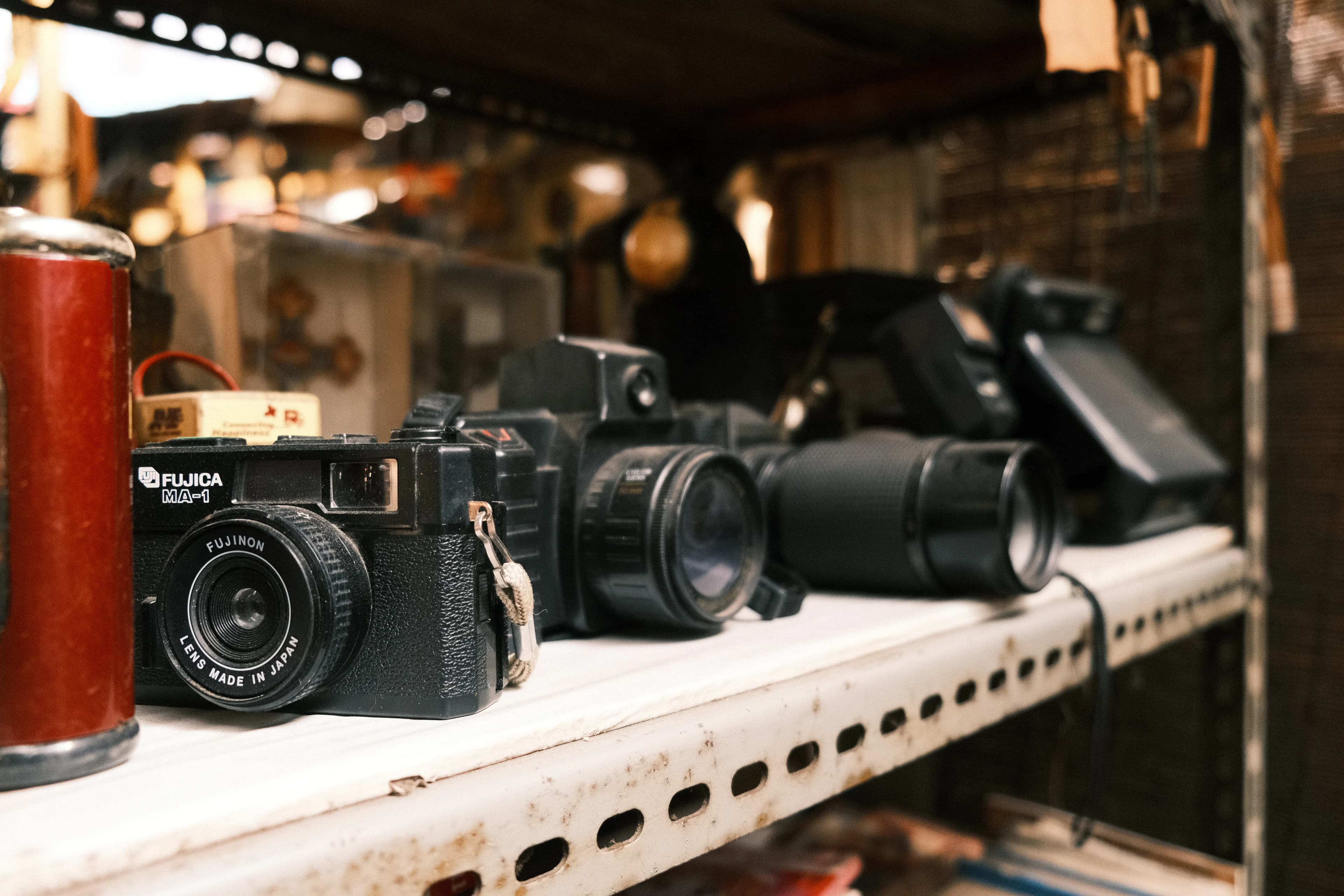
A modern iPhone or high-end smartphone today possesses a multi-megapixel sensor cluster, a periscope lens, and an AI processor capable of denoising every single strand of hair. Yet, increasingly more young people of Generation Z are willing to scour flea markets, spending anywhere from a few tens to hundreds of dollars to own a compact digicam released back in 2000–2006.
This phenomenon is not merely a passing TikTok trend. Behind the "hunt" for archaic Canon IXYs, Sony Cyber-shots, or Olympus Camedias is a silent rebellion against algorithmic aesthetics, combined with the practical economic reality of content creators.
The Thirst for "Imperfection" in the Era of AI Algorithms
Algorithm vs Reality(CLICK TO EXPAND)
EDITORIAL ARCHIVE // SOURCE: INTERNET ARCHIVE
The smartphone photo paradox: The sharper they are, the more they look the same
Modern mobile photography is dominated by Computational Photography. When you press the shutter button on a smartphone, the camera doesn't capture a single photo; it secretly captures a series of frames at different exposure levels and uses algorithms to stitch them together (Smart HDR, Deep Fusion).
The result is:
- Shadows are over-brightened, losing natural depth.
- Skin is flattened but pores get an artificial halo due to sharpening algorithms.
- Every photo taken is technically perfectly exposed, but inadvertently strips away all visual emotion. They are flat, clean, and completely uniform.
Early CCD sensors: When limitations become aesthetics
CCD Sensor(CLICK TO EXPAND)
EDITORIAL ARCHIVE // SOURCE: INTERNET ARCHIVE
Most compact cameras produced before 2008 used CCD (Charge-Coupled Device) sensors instead of the CMOS sensors common today. CCD sensors of this era had a very narrow dynamic range and poor noise control.
These very "weaknesses" create a unique photo quality:
- Harsh Highlight Roll-off: When shooting backlit or with direct flash, the blown-out areas are clipped naturally, accurately reproducing the film feel of the 2000s.
- Pop-up flash flattening space: The built-in flash on old cameras emits harsh light straight at the subject, creating a slight shine on the skin and casting dark shadows behind — the standard Y2K visual style that software filters cannot fully replicate.
- Rich Colors (Raw Saturation): Early CCD sensors from brands like Kodak, Nikon Coolpix, or Fujifilm tended to reproduce warm, vibrant tones under natural daylight.
Film Photography Costs Peak: The Escape Route Called "Digicam"
Film camera cost(CLICK TO EXPAND)
EDITORIAL ARCHIVE // SOURCE: INTERNET ARCHIVE
Before the digicam craze exploded, analog film cameras were the number one choice for those seeking nostalgia. However, cost barriers have increasingly pushed young people away from film:
- The price of a common 35mm roll of film has doubled or tripled in the past few years.
- Development and scanning costs come with the risk of ruining a roll due to poor storage.
The digicam is the perfect intersection: It produces photos with randomness, natural grain, and a nostalgic color similar to film, but it's completely free per click. You can take hundreds of photos every time you hang out, plug the memory card into a computer or phone reader, and have photos ready for Instagram immediately. Unlike investing in professional camera bodies, a digicam is highly spontaneous and entertaining.
Slow down(CLICK TO EXPAND)
EDITORIAL ARCHIVE // SOURCE: INTERNET ARCHIVE
When you raise your smartphone to take a picture, the screen displays message notifications, work emails, and pings from social media platforms. The experience of capturing a moment is fragmented by distractions.
A 20-year-old camera provides a Single-purpose Device experience:
- No notifications, no internet connection: Just you, the viewfinder, and the subject.
- Tiny, low-resolution LCD screen: The 1.5 to 2.5-inch screens of that era were so blurry you couldn't inspect every detail right after shooting. You had to trust your feeling, put the camera back in your pocket after shooting, and continue enjoying the fun with friends, rather than standing there choosing which photos to delete on the spot.
Comparison Chart: Old Compact Cameras vs. Modern Smartphones
Digicam comparison(CLICK TO EXPAND)
EDITORIAL ARCHIVE // SOURCE: INTERNET ARCHIVE
| Criteria | Old CCD Compact Camera (2000 - 2008) | Modern Smartphone (Flagship) |
|---|
| Image Nature | Raw, natural grain, harsh highlights | AI algorithm denoising, smoothing |
| Skin Tone | Slight powder effect under flash, warm/pink tint | Accurate, flat, high contrast |
| Shooting & AF Speed | Slow, shutter lag, easily out of focus | Instant, eye-tracking via LiDAR sensor |
| Workflow | Needs removing card, copying via reader | Cloud sync, on-the-spot editing |
| Cost of Ownership | $20 – $100 (used market) | $600 – $1500 |
The Truth About "Tech Waste": 3 Traps to Avoid
Tech waste(CLICK TO EXPAND)
EDITORIAL ARCHIVE // SOURCE: INTERNET ARCHIVE
The used camera market is currently inflated and holds many technical risks:
- The "toy camera" disguised as vintage trap: Many shops import newly manufactured plastic mini cameras from China (labeled 44MP, 48MP interpolated) for a few tens of dollars. These use terrible, cheap webcam sensors and are absolutely not the vintage CCD sensors from renowned camera brands of the past.
- Expired lithium batteries: The batteries of cameras from 2003-2005 are mostly swollen or severely degraded. If that camera uses a proprietary battery that is no longer produced, you will have to pay a premium to hunt for a "modded" battery.
- Extinct proprietary memory card standards: Be careful with cameras using xD-Picture Cards (Olympus/Fuji) or early Memory Stick Pro Duos (Sony). These memory cards, with capacities of only 256MB or 512MB, are now sometimes more expensive than the camera itself.
5-Step Checklist to Test an Old Camera in Person
- Check the optical zoom mechanism: Zoom in and out several times to see if the lens extends and retracts smoothly, if there's a gear grinding noise, or if a "Lens Error" pops up.
- Sensor Test: Close the aperture to the maximum (or zoom all the way in), point the camera at a white sheet of paper or a solid bright wall. Review the zoomed-in photo to spot hot pixels or fungus/mold spots inside the lens cluster.
- Test the pop-up flash: Turn on "Forced Flash" and take 3 consecutive shots. If the camera shuts down while charging the flash, the battery circuit or the camera's capacitor is broken.
- Check the battery door: Older cameras often use plastic tabs to hold the battery spring. Many cameras have broken tabs, causing loose batteries and flickering power during use.
- Choose AA battery cameras: If you don't want the headache of finding an external charger, prioritize cameras that run on 2 AA batteries (like some Canon PowerShot A series or Nikon Coolpix L series).
Frequently Asked Questions (FAQ)
Should I buy an old compact camera to completely replace my phone?
No. An old digicam is a supplementary creative tool for entertainment and stylistic collecting. In severe low-light conditions or when you need to quickly snap documents or record work videos, a modern smartphone is vastly superior.
What is a reasonable price range for a used CCD compact camera?
A reasonable price for a working camera with decent cosmetics ranges from $30 to $80. You should not spend over $120 for a 5-7MP travel camera just because it's "trending" on social media.
What is the fastest way to transfer photos from a 20-year-old camera to an iPhone?
Buy a multi-card reader (supporting SD/CF) with a Type-C or Lightning connector. Pull the card out, plug it straight into your phone, open the "Files" or "Photos" app, and you can export photos in 10 seconds without a bulky computer.