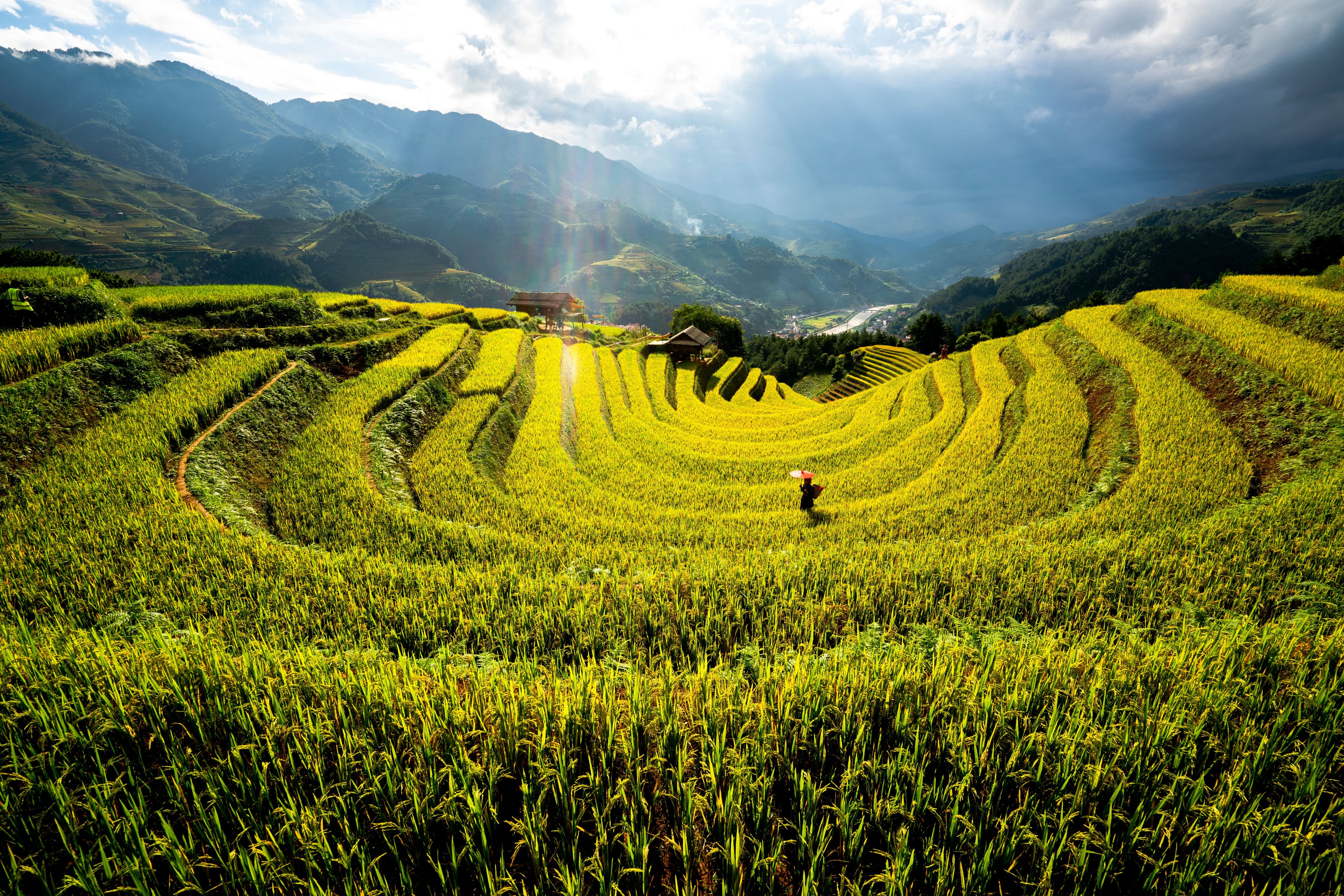
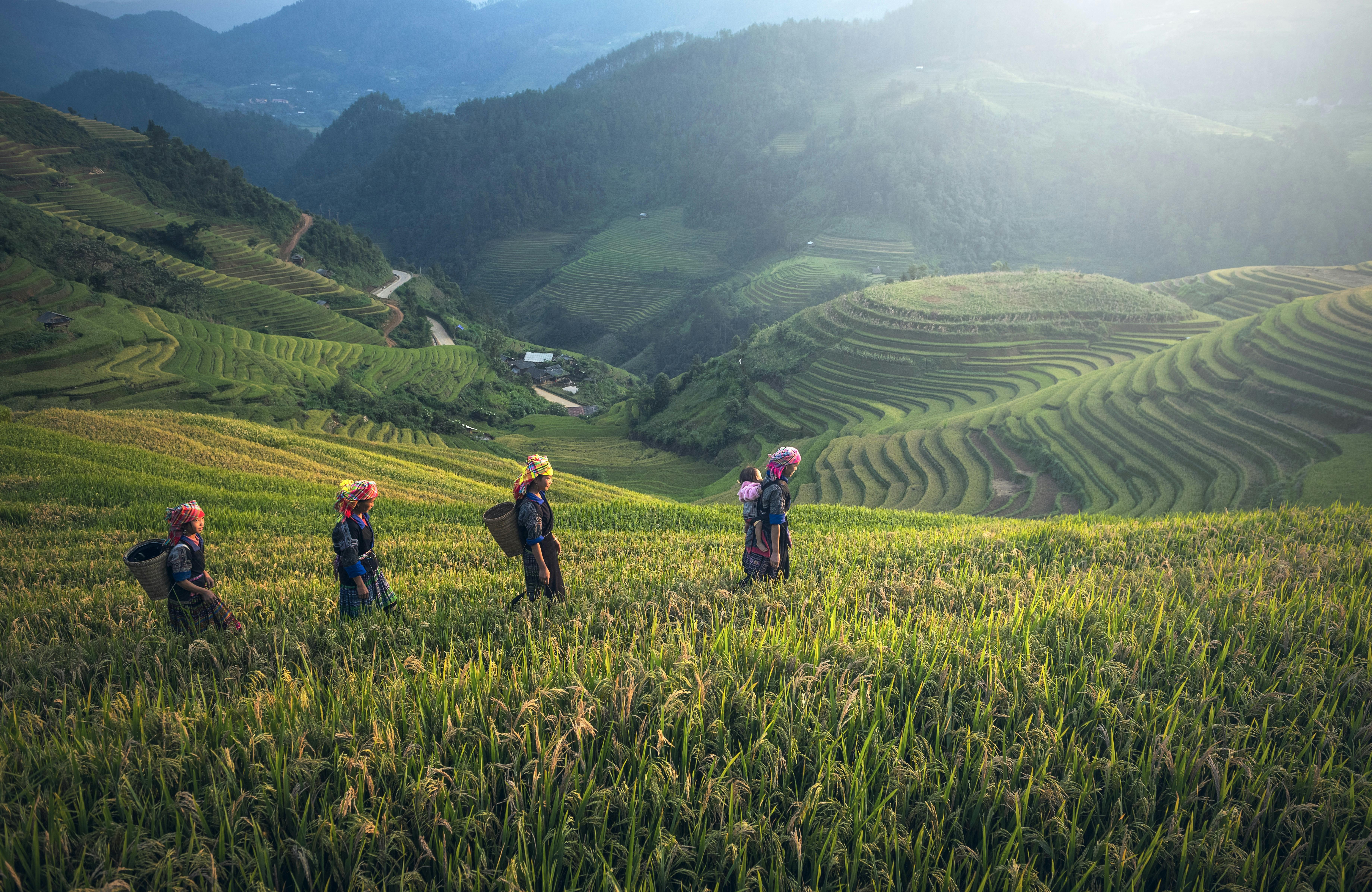
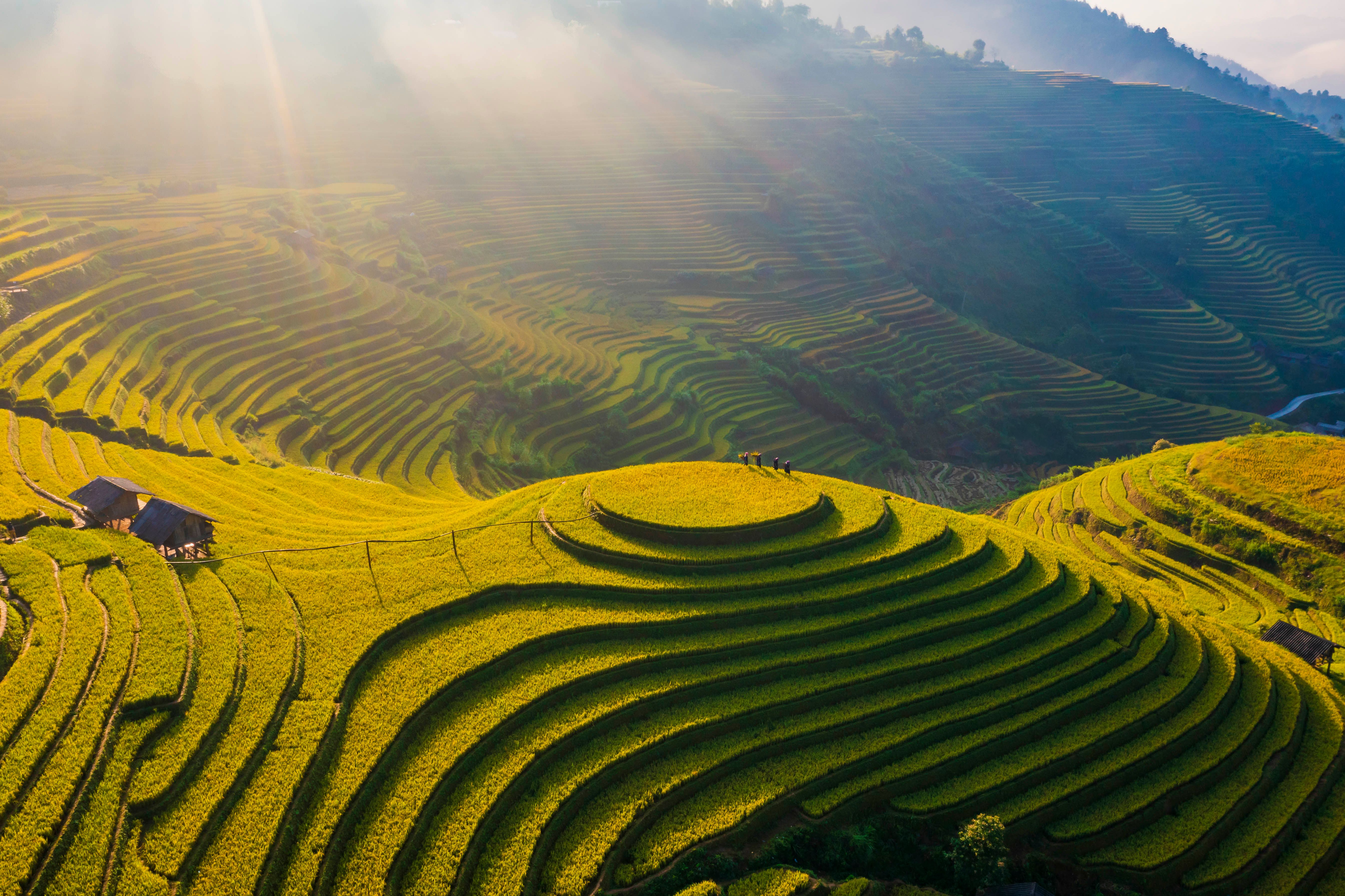
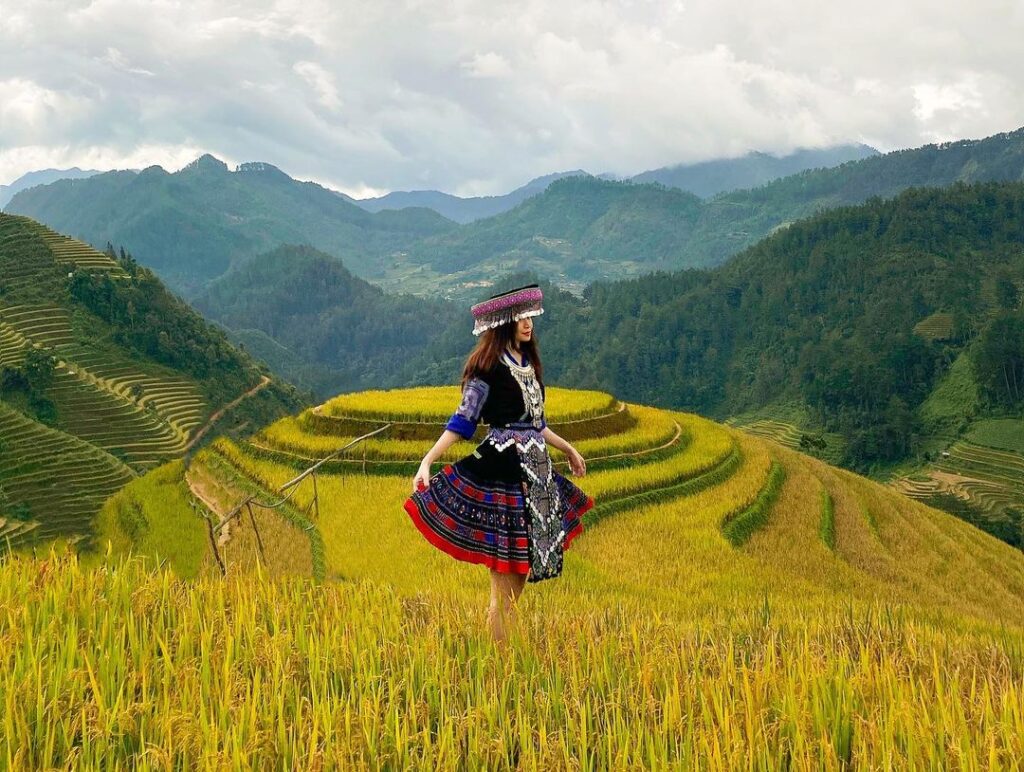
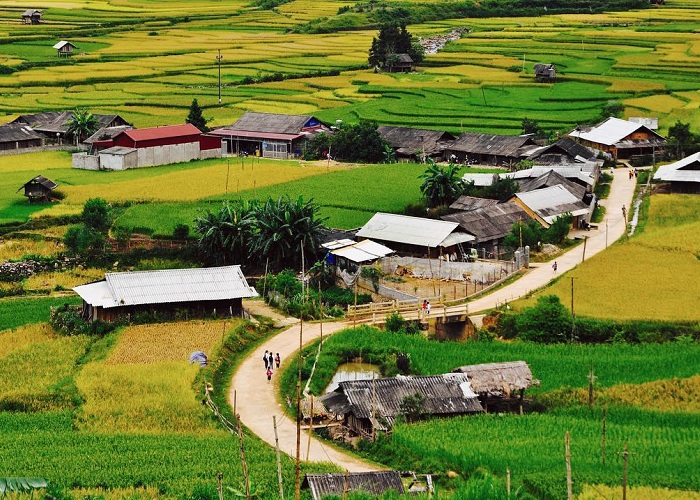
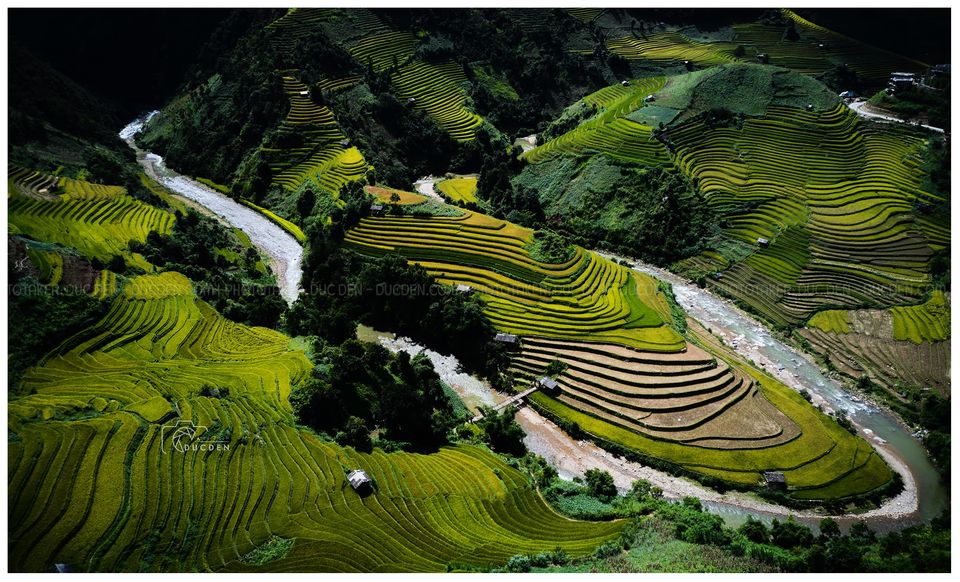
The terraced fields of Mu Cang Chai (Yen Bai) have long been a cultural heritage and the most magnificent visual symbol of Vietnam's Northwest region. Every autumn, thousands of terraced layers winding around the mountainsides simultaneously turn from jade green to shining gold, creating a mesmerizing natural painting for any photographer or travel enthusiast.
However, fully capturing the surreal beauty of Mu Cang Chai requires more than just a regular sightseeing trip. The harsh lighting contrast between the valley and the sky, rapidly changing highland weather, and steep mountainous terrain pose significant challenges for gear selection and camera placement. Based on practical data from the landscape photography community and precise optical parameters, this article is an in-depth guide to help you optimize every frame this golden season.
1. The "Golden" Time to Shoot Mu Cang Chai Terraces
To get the shots you want, the prerequisite is the harmony between the ripeness of the rice and the direction of the light.
1.1. Rice Color Evolution from Late August to Mid-October
Rice changing color(CLICK TO EXPAND)
EDITORIAL ARCHIVE // SOURCE: PEXELS
Mu Cang Chai's terrain has different elevation levels, so the rice doesn't ripen all at once but consecutively by area:
- Phase 1 (Late Aug – Mid-Sep): The "Mam Xoi" (Raspberry) rice changes color (Green at the bottom, green-gold at the top). This is when the terraced fields have a beautiful multi-tonal intertwining (young green, apricot yellow, yellowish), very suitable for angles with gentle color contrast and a lot of seasonal breath.
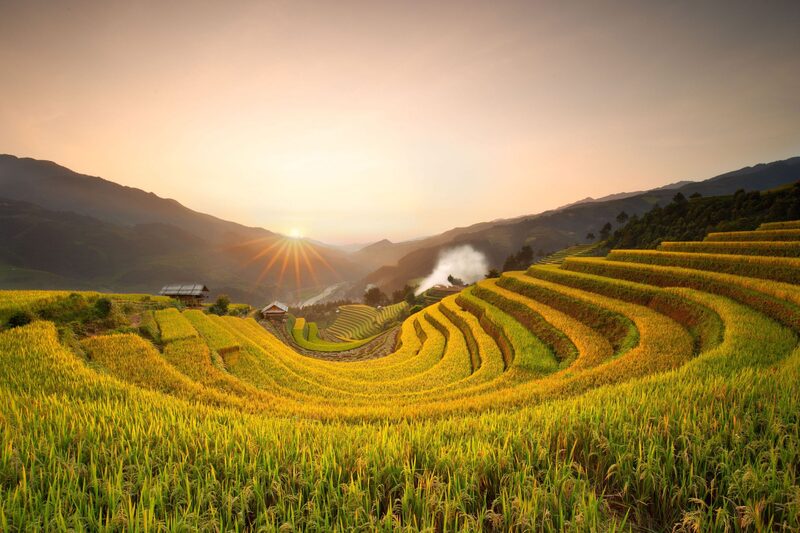
- Phase 2 (Around Sep 15 – Oct 5): The peak of the brilliant golden season. Epicenters like La Pan Tan, Mong Ngua (Horseshoe), and Lao Chai reach simultaneous ripeness. Each shining wave of rice reflects the golden autumn sunlight, creating the most beautiful natural color saturation of the year.
- Phase 3 (After Oct 5 – Mid-Oct): Harvest season and highland life. The H'Mong people begin harvesting. You will be able to record photos with a strong everyday documentary feel with images of harvesting, threshing rice on the fields, and straw smoke lingering in the sunset.
1.2. Light Map: Ideal Sunrise and Sunset Hours
Sunset on fields(CLICK TO EXPAND)
EDITORIAL ARCHIVE // SOURCE: PEXELS
In the high mountains of the Northwest, the sun usually appears later behind the mountain ranges and disappears earlier compared to the plains:
- Sunrise Hour (05:30 – 07:15): Side light highlights the curving ridges of the terraced fields, blending with the lingering morning mist down in the valley.
- Sunset Hour (16:30 – 18:00): Late afternoon sunlight brings a warm color temperature band (3200K – 4500K), turning the entire hillside into a sparkling golden waterfall before transitioning to the Blue Hour.
2. Photography Gear for the Mountain Trip: Minimalist yet Omnipotent
The terrain of Mu Cang Chai requires photographers to move around a lot by motorbike on mountain passes and trek up steep slopes. Balancing superior image quality and luggage weight is a vital criterion.
2.1. Camera Body & Highland Dynamic Range
Gear(CLICK TO EXPAND)
EDITORIAL ARCHIVE // SOURCE: PEXELS
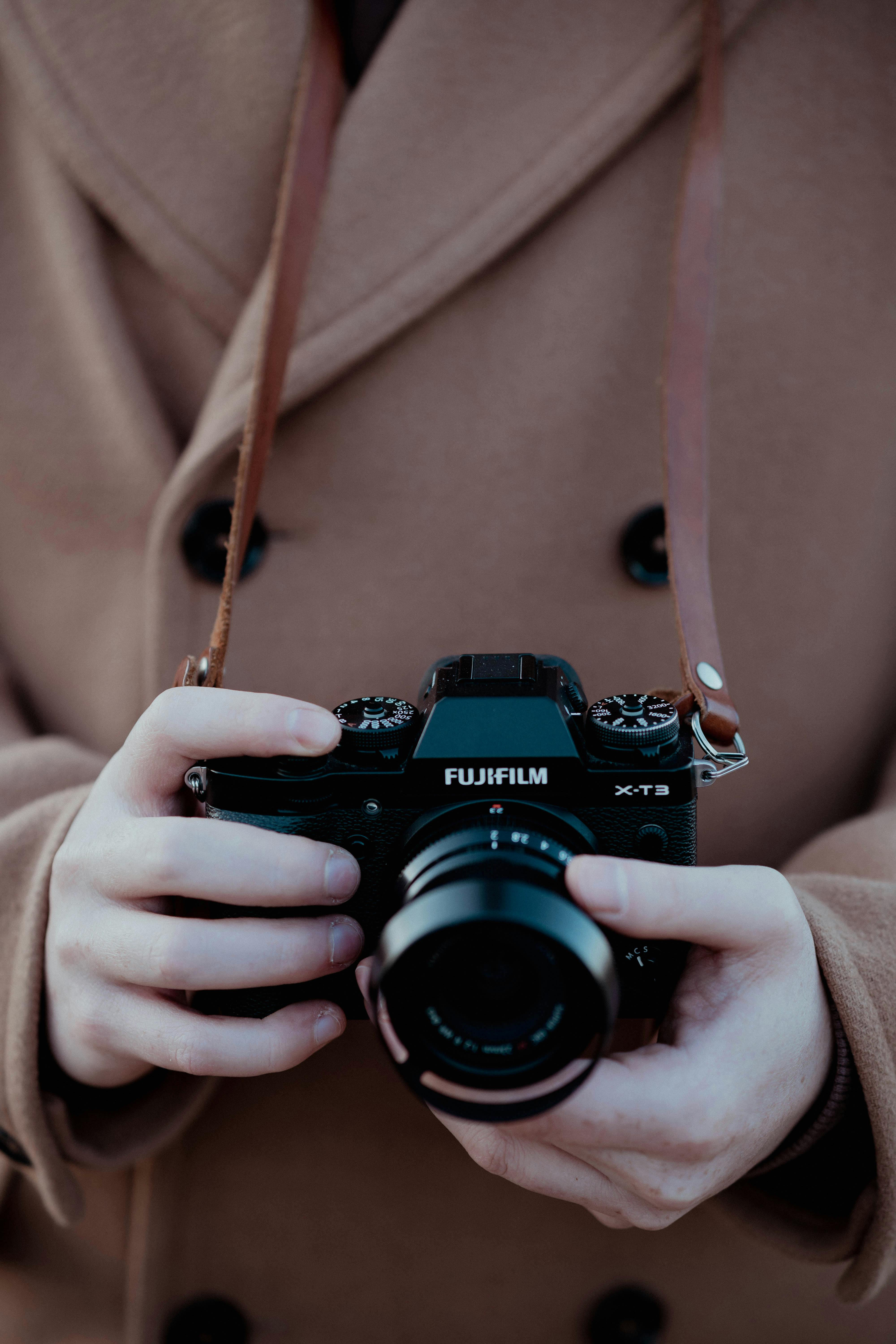
Mirrorless cameras with a high Dynamic Range of 14–15 stops (like the new generation Full-frame sensors from Sony, Nikon, Canon, or the new generation 40MP APS-C from Fujifilm) allow you to recover shadow details in the valley without blowing out the highlights in the sky. Additionally, In-Body Image Stabilization (IBIS) helps with steady hand-held shots when you don't have time to set up a tripod.
2.2. Lens Selection: Why is Telephoto more important than Ultra-wide?
Lens(CLICK TO EXPAND)
EDITORIAL ARCHIVE // SOURCE: PEXELS
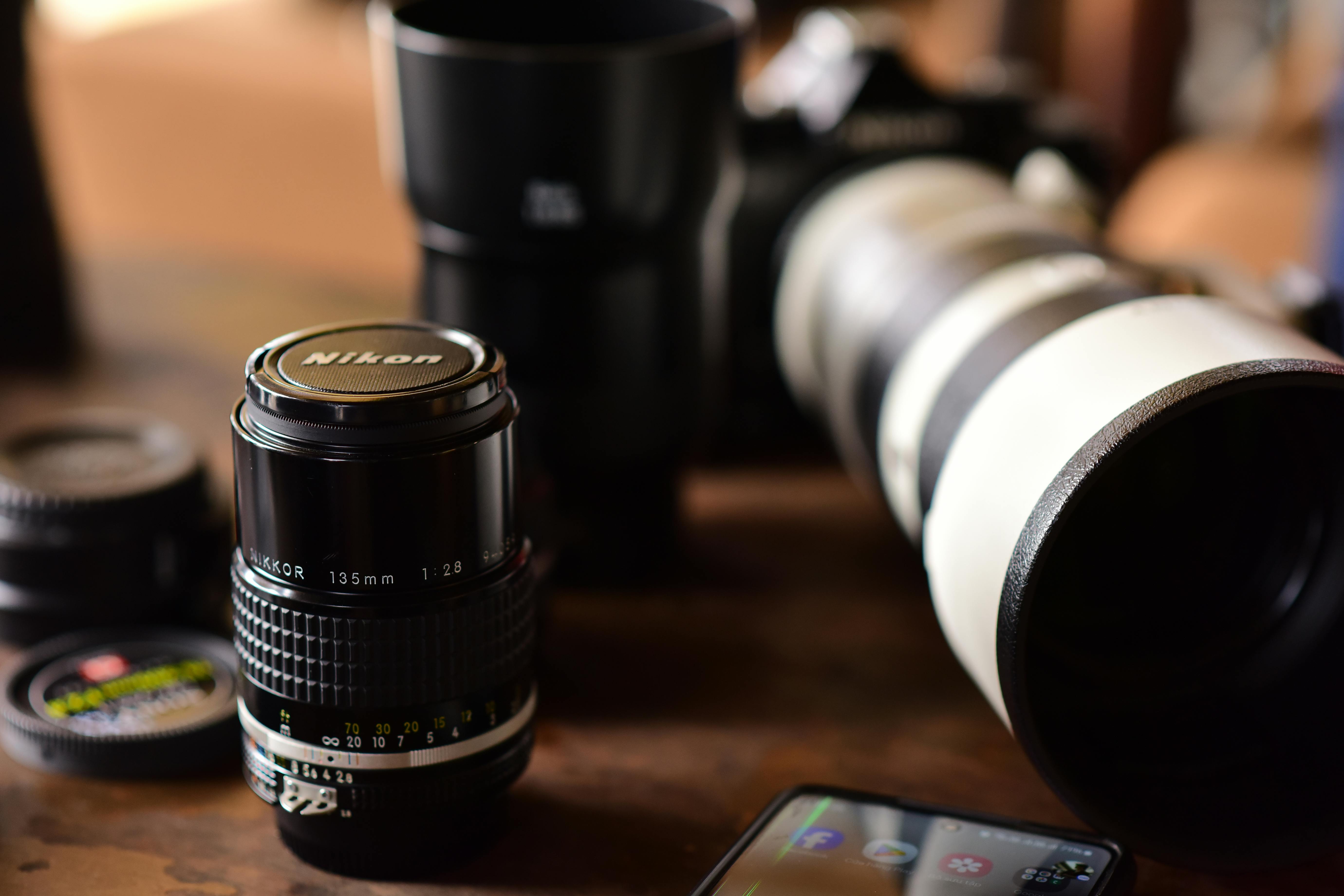
Many beginners often think landscape photography requires an ultra-wide-angle lens (16-35mm). But in Mu Cang Chai, a Telephoto lens (70-200mm or 70-300mm) is truly the "ultimate weapon":
- Lens Compression Effect: Pulls distant terraced layers closer together, creating the feeling of dense, majestic overlapping waves of rice.
- Isolating Subjects: Easily captures a lonely wooden house on the hill, a small bridge, or the silhouette of a farmer harvesting amidst a sea of gold without being distracted by surrounding visual clutter.
- Ideal Versatile Focal Range: A high-quality standard zoom lens (like 24-70mm or 24-105mm) combined with a compact telephoto lens (like 70-200mm f/4 or 70-180mm f/2.8) will cover 95% of shooting situations.
2.3. Filter System: CPL and GND – Color Separation Weapons
Filter(CLICK TO EXPAND)
EDITORIAL ARCHIVE // SOURCE: PEXELS
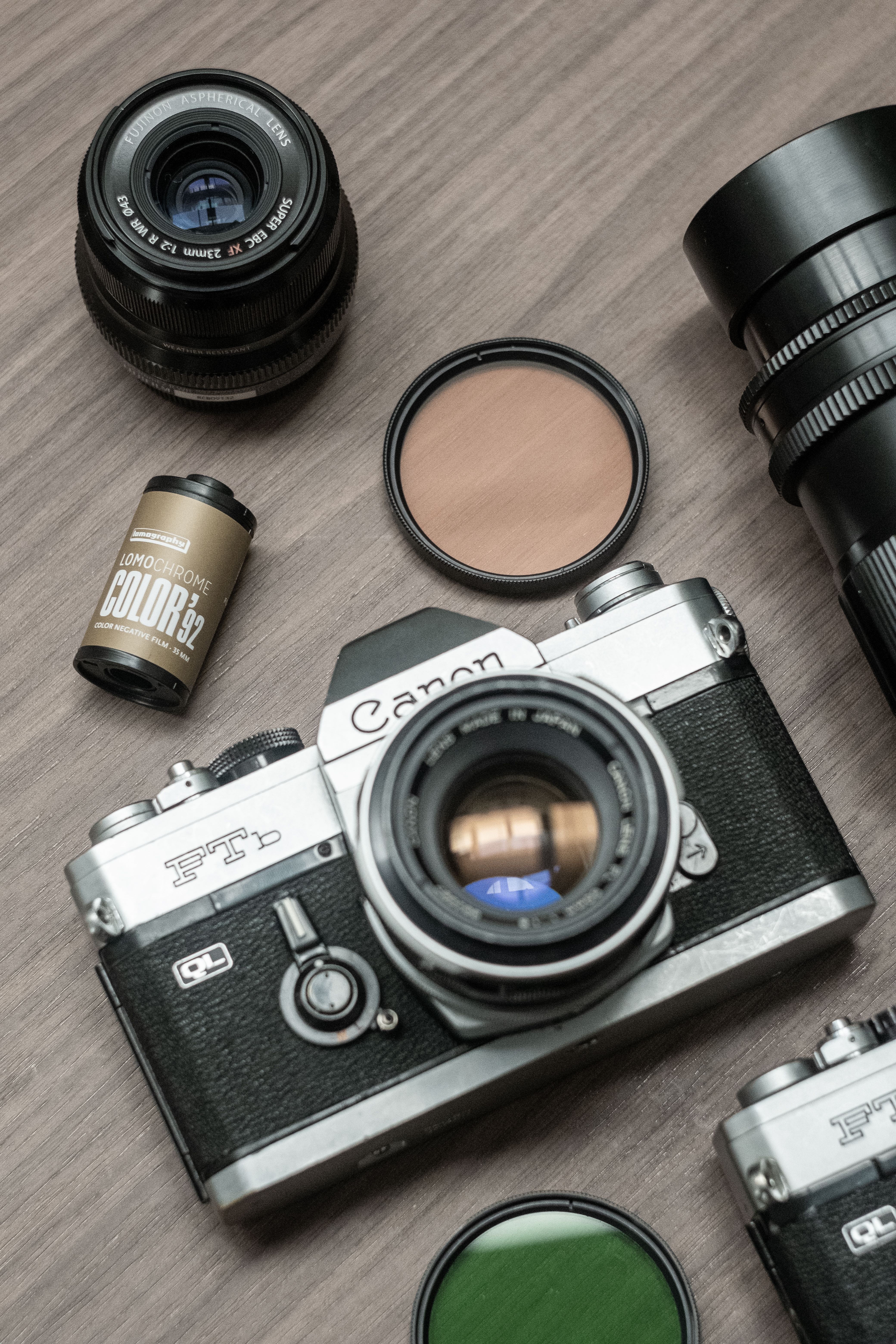
- Circular Polarizer (CPL Filter): Extremely important when shooting rice. CPL eliminates light reflection on the surface of wet rice leaves and air moisture, helping the yellow and green colors appear saturated, distinctly contrasted, and the sky much deeper.
- Soft Graduated ND Filter (GND): Helps lower the light of the sunrise/sunset sky by 2 to 3 stops, perfectly balancing it with the dark field areas below.
2.4. Essential Practical Accessories
| User Level | Recommended Body | Core Lens | Must-have Accessories |
|---|
| Compact / Prosumer | Sony A6700 / Fujifilm X-T5 / Canon EOS R50 | 18-50mm f/2.8 + 70-350mm (or 70-300mm) | Mini carbon tripod, matching CPL Filter, 2 spare batteries |
| Professional / Landscape | Sony A7C II / A7R V / Nikon Z6 III / Canon R6 II | 24-70mm f/2.8 + 70-200mm f/2.8 or 100-400mm | High payload tripod, GND + CPL square filter kit, 4K Drone |
| Travel Experience / Vlogger | DJI Osmo Pocket 3 / Sony ZV-E10 II | Super compact kit lens + 24mm/35mm prime lens | Extension selfie stick, Wireless Mic, High-speed V60/V90 SD card |
3. Coordinate Map & Techniques to Capture 5 Classic Angles
To avoid wasting effort moving around, you need to clearly understand the visual characteristics and sun direction of each landmark.
3.1. Horseshoe Hill (Sang Nhu): Sunset Peak and Backlit Techniques
Horseshoe(CLICK TO EXPAND)
EDITORIAL ARCHIVE // SOURCE: INTERNET ARCHIVE
- Coordinates & Characteristics: Located about 2km from the center of Mu Cang Chai town, then take a local motorbike taxi up a steep rocky slope for another 2km.
- Perfect Shooting Time: 16:30 – 17:45.
- Angle & Composition: Stand from the high hilltop looking down at the semi-circular terraced strips like a horseshoe. When the sun sets right behind the mountain range in front, all the field borders reflect the side light to form magically sparkling Rim lights.
- Recommended Focal Length: 16-24mm if you want to capture the entire horseshoe arc and the fiery sky; 70-135mm to detail each sharp winding patch.
3.2. Big & Small Mam Xoi Hills (La Pan Tan): Capturing Sunrise and Morning Mist
Mam Xoi(CLICK TO EXPAND)
EDITORIAL ARCHIVE // SOURCE: INTERNET ARCHIVE
- Coordinates & Characteristics: The most famous symbol of the Northwest terraced fields, about 8km from the town.
- Perfect Shooting Time: 05:45 – 07:30.
- Execution Technique: Arrive early when the fog is still lingering halfway up the hill. Catch the first rays of sunlight shining on the round conical top of Mam Xoi hill. Use a 70-200mm focal length standing from the opposite hillsides to avoid the crowded scenes on the path, keeping the frame elegant and highlighting the hill's round geometric structure.
3.3. Lim Mong – Cao Pha Valley: The Mountain Aura at the Foot of Khau Pha Pass
Lim Mong(CLICK TO EXPAND)
EDITORIAL ARCHIVE // SOURCE: INTERNET ARCHIVE
- Perfect Shooting Time: 08:00 – 10:00 or 15:00 – 16:30.
- Angle: Stand from halfway up Khau Pha Pass, casting your eyes over the entire Lim Mong valley with a winding stream flowing through the golden ripe rice fields. This is the ideal place to use a 200–400mm telephoto focal length to catch the thatched stilt houses appearing and disappearing amidst the vast gold.
3.4. Lao Chai – De Xu Phinh: Layers of Mother Earth's Patterns
Lao Chai(CLICK TO EXPAND)
EDITORIAL ARCHIVE // SOURCE: INTERNET ARCHIVE
- Perfect Shooting Time: All day when the sky is partly cloudy.
- Characteristics: Not as crowded as Mam Xoi, the terraced fields in Lao Chai are steeper, with elevations stretching hundreds of meters from the mountain peak down to the deep stream bottom. The camera angle here brings a feeling of wilderness, originality, and the ultimate majesty.
4. Peak Landscape Parameter Setups & Techniques
4.1. Golden Aperture and Hyperfocal Focusing Point
Hyperfocal(CLICK TO EXPAND)
EDITORIAL ARCHIVE // SOURCE: INTERNET ARCHIVE
- Most lenses achieve optimal optical sharpness and minimize Diffraction in the f/8 to f/11 aperture range.
- When shooting wide scenes with a foreground (flowers/nearby field borders) and a background (distant mountains), focus on a position about 1/3 of the frame from the bottom up (or calculate the Hyperfocal distance) to keep the entire image from foreground to infinity perfectly deep in focus.
4.2. Multi-layer Exposure Technique (Exposure Bracketing / HDR)
In strong backlit situations like the Horseshoe Hill sunset:
- Set the camera to AEB continuous shooting mode for 3 or 5 shots spaced 1 to 2 EV apart (underexposed shot keeps sky details, normal shot keeps neutral details, overexposed shot keeps field trench details in the shadows).
- Merge the RAW files using post-processing software (Lightroom HDR Merge or Photoshop) to get a 32-bit image with a natural light range, without muddy shadows or blown-out highlights.
4.3. Safe Drone Flying Experience Amidst Swirling Valley Winds
Drone(CLICK TO EXPAND)
EDITORIAL ARCHIVE // SOURCE: INTERNET ARCHIVE
A Top-down view or a Parallax side-flight angle fully showcases the soft patterns of the terraced fields:
- Flight Safety Warning: Highland valleys often have localized swirling winds and thick morning fog that moistens optical sensors. Always keep a safe distance (Line of Sight), check spare battery levels (batteries drain faster in cold highland weather), and set the Return To Home (RTH) altitude at least 50 meters higher than surrounding mountain peaks.
- Flight Regulations: Strictly comply with no-fly zone regulations, avoid flying too close to crowded areas or civilian power lines in the villages.
5. Code of Conduct & Cultural Preservation When Shooting
A perfectly beautiful photo must stem from respect for the land and the people where you step foot:
- Do not trample on the rice: Strictly move only on the solid field borders built by the locals. Avoid breaking the ripe rice stalks of the farmers.
- Civilized behavior when taking portraits of children and locals: Please ask for permission before taking close-ups; converse amicably with a smile instead of turning photography into an annoyance.
- Protect the environment: Do not litter trash, plastic bags, or water bottles at shooting spots. Preserve the pristine beauty of the high mountains intact.
6. Summary & Packing Checklist
The Mu Cang Chai Golden Season photo hunting trip will become an unforgettable memory if you are thoroughly prepared in spirit, skills, and equipment.
Pack your bags and hit the road with an understanding of technique and a heart moved by the majestic beauty of the country. Wishing you the most satisfying Mu Cang Chai golden season artworks!
Frequently Asked Questions (FAQ)
What is the most beautiful time of day to take photos in Mu Cang Chai?
The two most valuable time frames are Sunrise (05:30 – 07:15) at Mam Xoi Hill (La Pan Tan) when the early mist still hovers over the rice waves, and Sunset (16:30 – 17:45) at Horseshoe Hill (Sang Nhu) when the side sunlight creates bright golden rims on each terrace.
Should I prioritize a wide-angle or telephoto lens when shooting terraced landscapes?
A Telephoto lens (70-200mm or 70-300mm focal length) is the number one priority in Mu Cang Chai. The lens compression effect helps distant terraced layers overlap densely, creating majestic depth and easily isolating valuable details like wooden stilt houses or the silhouettes of people working in the fields.
Is a CPL filter really necessary when shooting ripe rice?
Extremely necessary. A CPL polarizing filter helps eliminate light reflections on the wet rice leaves' surface and the fog in the air, helping the golden and green colors of the fields achieve a natural contrast and color saturation that is hard to perfectly recreate in post-production.
Do I need to bring a tripod when hunting for photos in Mu Cang Chai?
Yes. A tripod is a mandatory accessory when shooting sunrise/sunset at a low ISO to achieve the smoothest image quality, as well as when executing multi-layer exposure techniques (Exposure Bracketing / HDR) or shooting panorama photos stitched from multiple frames.