The History of the First Camera: Mechanical Design & The Motivation Behind It
Read more
Are you about to drop some hard-earned cash on a new camera, frantically googling: Is Mirrorless better than DSLR? Congratulations, you've just stepped into the most explosive minefield in the history of photography debates.
On one side, we have DSLRs—the muscular "giants" that have dominated the industry for decades. On the other side, Mirrorless cameras—the compact, Gen Z "tech geeks" loaded with trendy features. Has the era truly changed, or is Mirrorless just a media hype? Let's unpack the hard truths that camera brands rarely say out loud.
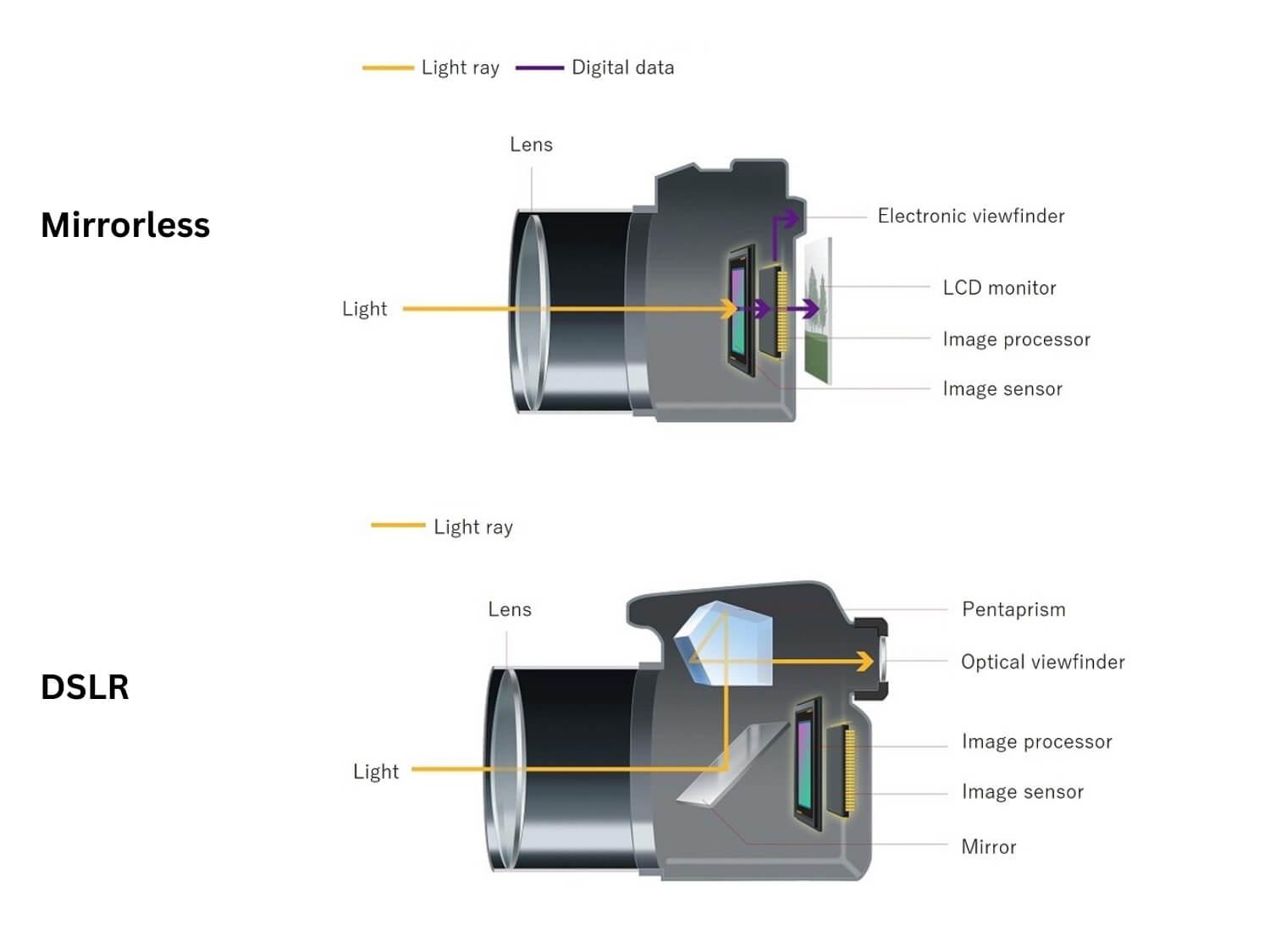
To understand why Mirrorless is lighter and breeds so much "magic" tech, we have to talk about the mirror.
In short: A DSLR is like looking at the world through a glass window. A Mirrorless camera is like watching the world through a hyper-sharp, 4K micro-television.
It's not a coincidence that giants like Sony, Canon, and Nikon are throwing all their resources—and even halting the development of some DSLR lines—to transition entirely to Mirrorless. Much like how people started treating film cameras as an irreplaceable travel souvenir, Mirrorless feels like an unstoppable technological leap.
Lightning-Fast Autofocus and Subject Tracking If you've ever cried in frustration because your DSLR suffered from front-focus or back-focus issues, you will fall in love with Mirrorless instantly. Thanks to on-sensor phase detection, a Mirrorless camera can track human eyes, animal eyes, and even speeding race cars with absolute precision.
Seamless Shooting: "What you see is what you get" With Mirrorless, whenever you adjust ISO, aperture, or shutter speed, the EVF and rear screen immediately reflect the changes in brightness and color. You no longer have to take a test shot and frantically chimp at the LCD to see if it's overexposed or too dark. If it looks good, you shoot. This reduces your "bad shot" ratio drastically, which is especially handy when shooting in tricky lighting at some of the coolest cafes in Saigon.
Featherweight Relief for Tired Shoulders Ditching the mirror mechanism and heavy pentaprism makes the Mirrorless camera body significantly thinner and lighter. This is an absolute lifesaver for documentary photographers, wedding shooters, and vloggers who have to lug their gear around all day.
Skip the sponsored, clinical lab tests from paid reviewers. Let’s see how actual gearheads clash on photography forums worldwide:
The Mirrorless Fanatics: "Once you switch, you never go back!" Over on r/photography, the majority of users who jumped ship share a common sentiment: "I used to lug a Canon 5D Mark IV to events and come home with a shattered spine. Switching to the Sony A7 IV was a revelation—the camera is lighter, and the Eye-AF is so accurate I could literally shoot with my eyes closed. DSLRs now feel like old Nokia phones: built like tanks but stubbornly refusing to innovate."
The DSLR Loyalists: "Don't underestimate the giants." However, the DSLR camp brings up incredibly valid points that Mirrorless is still struggling to catch up with: "Listen up folks, buying a Mirrorless means you have to buy a basket of batteries. My DSLR shoots 2,000 frames on a single charge. My Mirrorless hits 400-500 frames and the battery icon flashes red."
Another user on a Vietnamese photography group pointed out: "Holding a massive, beefy DSLR makes you look 'prestigious' and professional in front of clients. Plus, the optical viewfinder (OVF) has zero lag, feels organic, and doesn't strain your eyes like staring into an electronic EVF screen when shooting into the sun."
To make it easy to digest, I've packed the core criteria into this quick list:
The question Is Mirrorless better than DSLR? has no 100% absolute answer. It depends entirely on your budget and real-world needs:
Whether you prefer the imposing presence of a DSLR or the sleek convenience of a Mirrorless, the most important element is always the person behind the lens. Just like when you step in front of my camera, regardless of what gear I'm holding, I'll make sure you overcome your camera shyness and capture the perfect shot.