The History of the First Camera: Mechanical Design & The Motivation Behind It
Read more
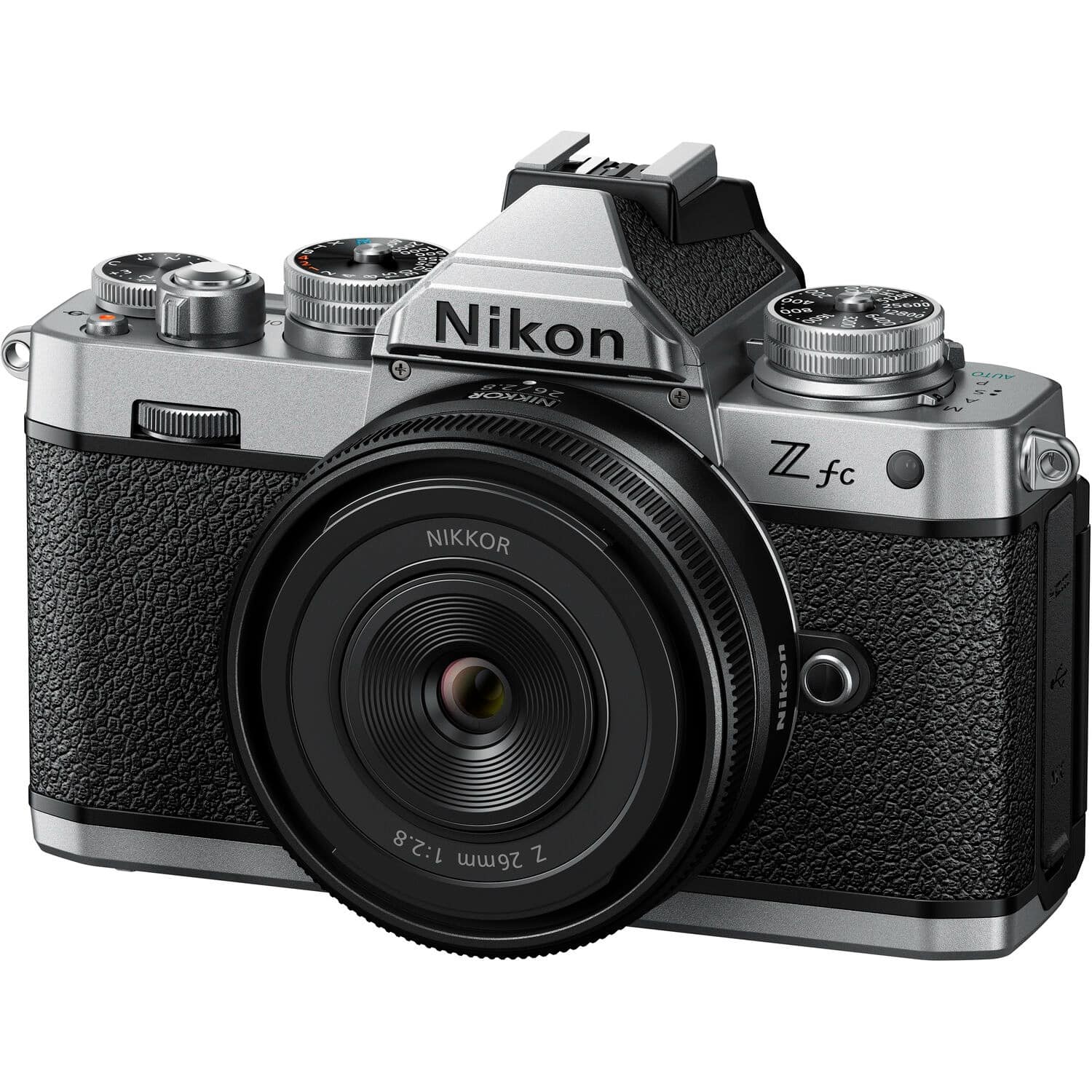
If you own a retro-styled Nikon Zf or Zfc, attaching a bulky lens to the body completely ruins the aesthetic and portability. That's when "pancake" lenses take the throne.
Debuting as the thinnest and lightest Full-frame lens in the Z-mount ecosystem, the Nikon Nikkor Z 26mm f/2.8 promises absolute mobility. However, with a premium price tag (double the Z 28mm f/2.8), is it truly worth it?
[!NOTE] This article is compiled and analyzed deeply based on lab tests from LensTip, Ken Rockwell, Phillip Reeve, and real-world experiences from the global Nikon community, aiming to provide you with the most neutral and objective perspective.
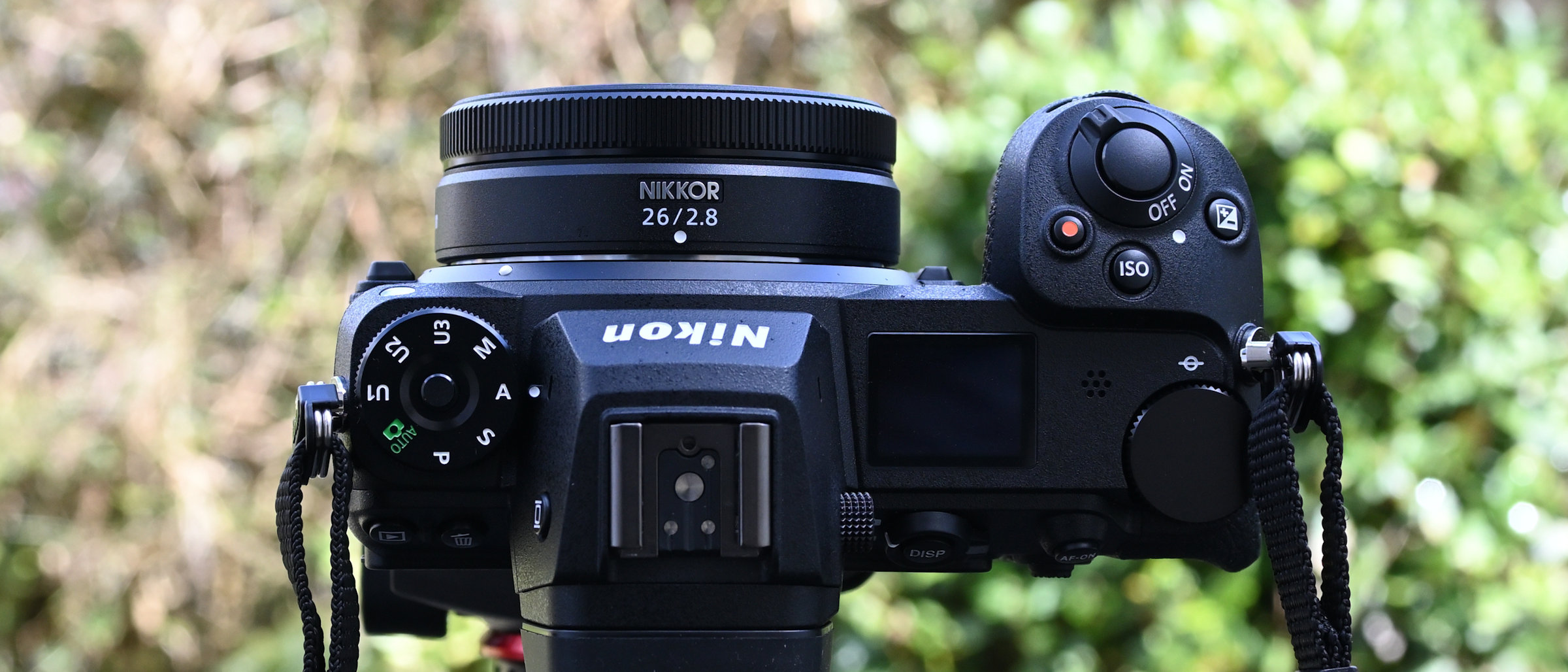
The biggest selling point of the Nikon Z 26mm f/2.8 is its physical footprint. Weighing only 125g and measuring a mere 23.5mm thick (under 1 inch), when mounted, it barely protrudes more than a body cap. This is a machine born to be a pocket prime and for discreet street photography. The lens mount is made of metal, providing a solid feel, even though the barrel is mostly high-quality plastic.
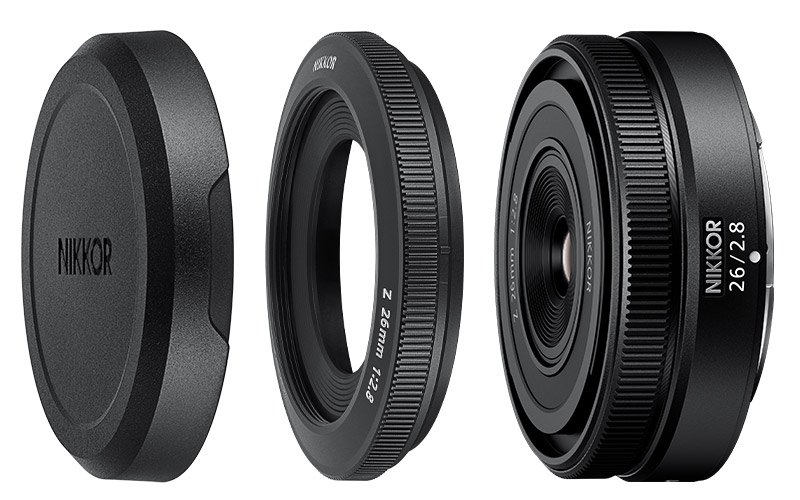
Here is a detail many retail pages gloss over: The Nikon Z 26mm f/2.8 does not have Internal Focus. When you focus, the entire lens group moves in and out by about 6mm.
To protect this moving lens group, Nikon includes the HB-111 Hood. But the interesting (and somewhat cumbersome) part is:

Don't let the toy-like appearance fool you; Nikon has crammed a very high-quality optical system into this ultra-thin body.
Lab tests from LensTip and MTF charts show that right at the widest aperture of f/2.8, center sharpness is excellent. The corners are slightly soft at f/2.8 but improve immediately when stopped down to f/4 or f/5.6. Excellent contrast gives images depth right out of the RAW file.
With 7 rounded aperture blades and an incredibly close minimum focusing distance of just 20cm, this lens allows you to get right up to your subject. The bokeh when shooting close-up is soft and smooth, superior to the nervousness often seen on the 24mm f/1.8 or 28mm f/2.8 when pushed to close distances.
Being an ultra-thin lens, it has to trade off some physics:
This is the factor you must consider most carefully before buying.
Unlike the invisible silence of S-line lenses, the stepper motor of the Nikon Z 26mm f/2.8 is quite noisy and produces a gritty sound. The autofocus speed is only average—sufficient for street photography and still life, but unsuitable for capturing high-speed sports action.
[!WARNING] The motor noise and focus breathing make this lens less than ideal if you shoot video in quiet environments using the camera's internal microphone.

Many users agonize between these two options. Here is a practical comparison table:
| Aspect | Nikon Z 26mm f/2.8 | Nikon Z 28mm f/2.8 |
|---|---|---|
| Thickness | Ultra-thin (23.5mm) - Pocket size | Twice as thick (43mm) |
| Mount | Metal | Plastic |
| Center Sharpness | Slightly better at close distances | Slightly lower |
| Price | High (~$500) | Half the price (~$250) |
| AF Motor | Noisy, external moving elements | Quieter, Internal Focus |
Summary: If you optimize 100% for size and want a premium lens to pair with the Nikon Zf/Zfc, choose the 26mm. If you care about price-to-performance and video, the 28mm f/2.8 is the smarter choice.

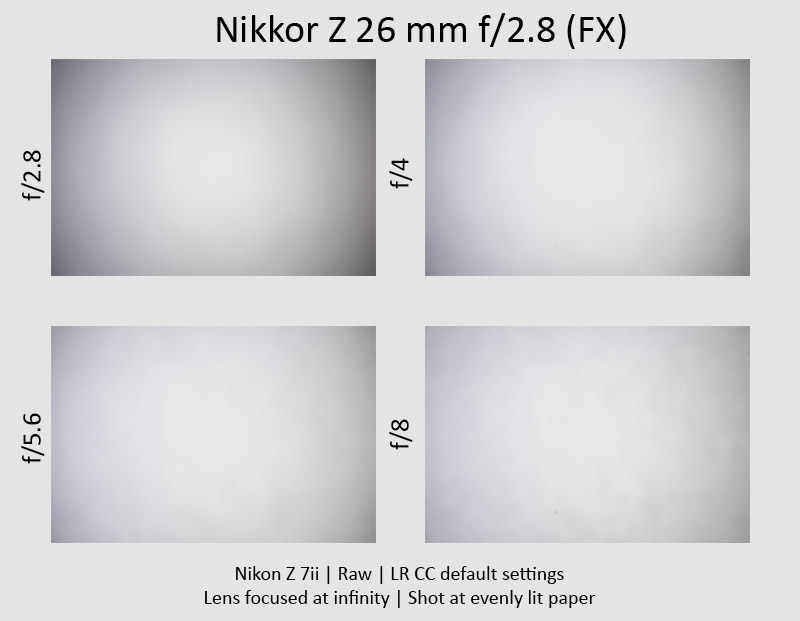
The Nikon Nikkor Z 26mm f/2.8 is not a perfect lens. It's expensive, loud to focus, and relies heavily on digital profiles to correct vignetting.
But, street photography sometimes doesn't demand absolute optical perfection. What you need is presence. At just 23.5mm thick, this lens turns bulky bodies into everyday point-and-shoot cameras, ensuring you always have your camera with you. The f/2.8 aperture is fast enough, center sharpness is excellent, and the 20cm close-focusing turns it into a formidable street fighter.
Overall Rating: 8/10 (Deducted points for noisy motor and high launch price).
Can the Nikon Z 26mm f/2.8 be used on APS-C cameras (Nikon Z50, Zfc, Z30)? Absolutely. When mounted on a DX (APS-C) sensor body, the equivalent focal length multiplies to about 39mm – a remarkably natural perspective, very close to the legendary 35mm focal length of street photography.
Why do I have to use the HB-111 hood on this lens? Unlike standard lenses, the Z 26mm f/2.8 does not have a filter thread directly on the barrel. You must attach the HB-111 hood to provide clearance for the moving lens elements (external focus), and the 52mm filter thread is located on this hood.
Is this lens good for vlogging? If you record audio directly with the camera's internal mic in a quiet space, the stepper motor might leak gritty noises into your video. The 26mm focal length on a Full-frame is quite good for vlogging, but on DX (becoming 39mm), the angle is a bit tight if you handhold it to film yourself.